What is BYD e-Platform 3.0 and what makes it different?
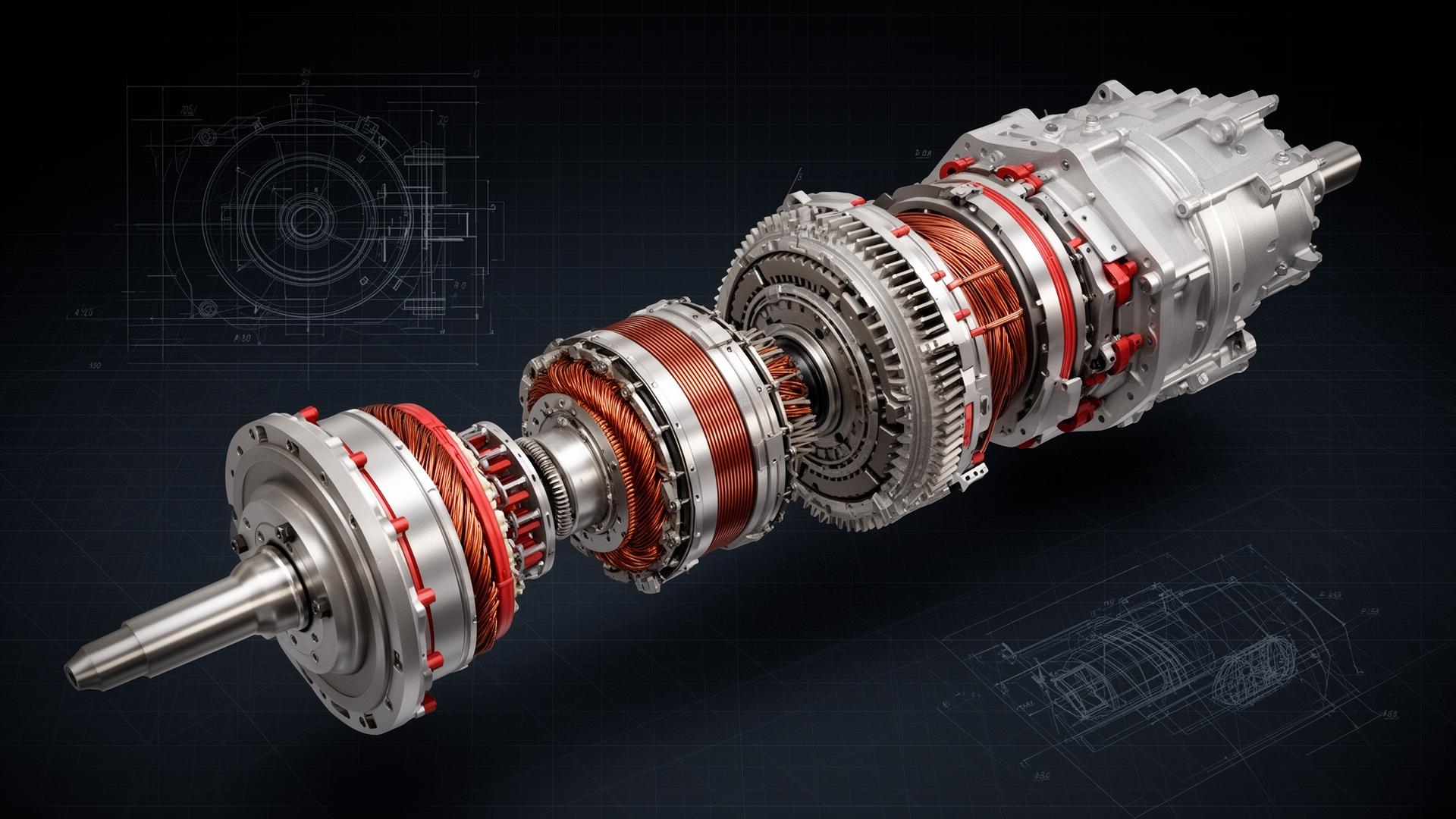
e-Platform 3.0 is the reason BYD undercuts everyone else — its integrated powertrain removes cost, weight and connections. Here's the engineering.
The 8-in-1 electric powertrain
Traditional EV drive units have separate motor, gearbox, inverter, PDU, DC-DC converter, OBC and BMS. BYD packages all eight into one module — 20% less mass, ~15% less cost, higher NEDC efficiency at 89%.
Cell-to-Body Blade
The Blade battery isn't just cell-to-pack — the pack itself is a structural member of the body-in-white. Torsional rigidity of an Atto 3 shell is ~40,000 Nm/deg — sports-sedan territory.
Consequence: the car feels significantly tighter than its price suggests, and NVH is well-controlled.
e-Platform 3.0 Evo (2024)
800V bus, 12-in-1 integration (adds swap-station connectors on some variants), silicon-carbide inverters. First car: Sea Lion 07. Ripping through the range from 2025.
- 01Vertical integration is the reason BYD prices are unbeatable.
- 02Blade doubles as structural stiffener.
- 03e-Platform 3.0 Evo pushes to 800V.
Sourcing parts or vehicles related to this?
ChinaEV.Autos connects buyers with 2,300+ verified Chinese suppliers. Get matched in minutes.