What is battery swapping and does it really work for NIO and CATL?
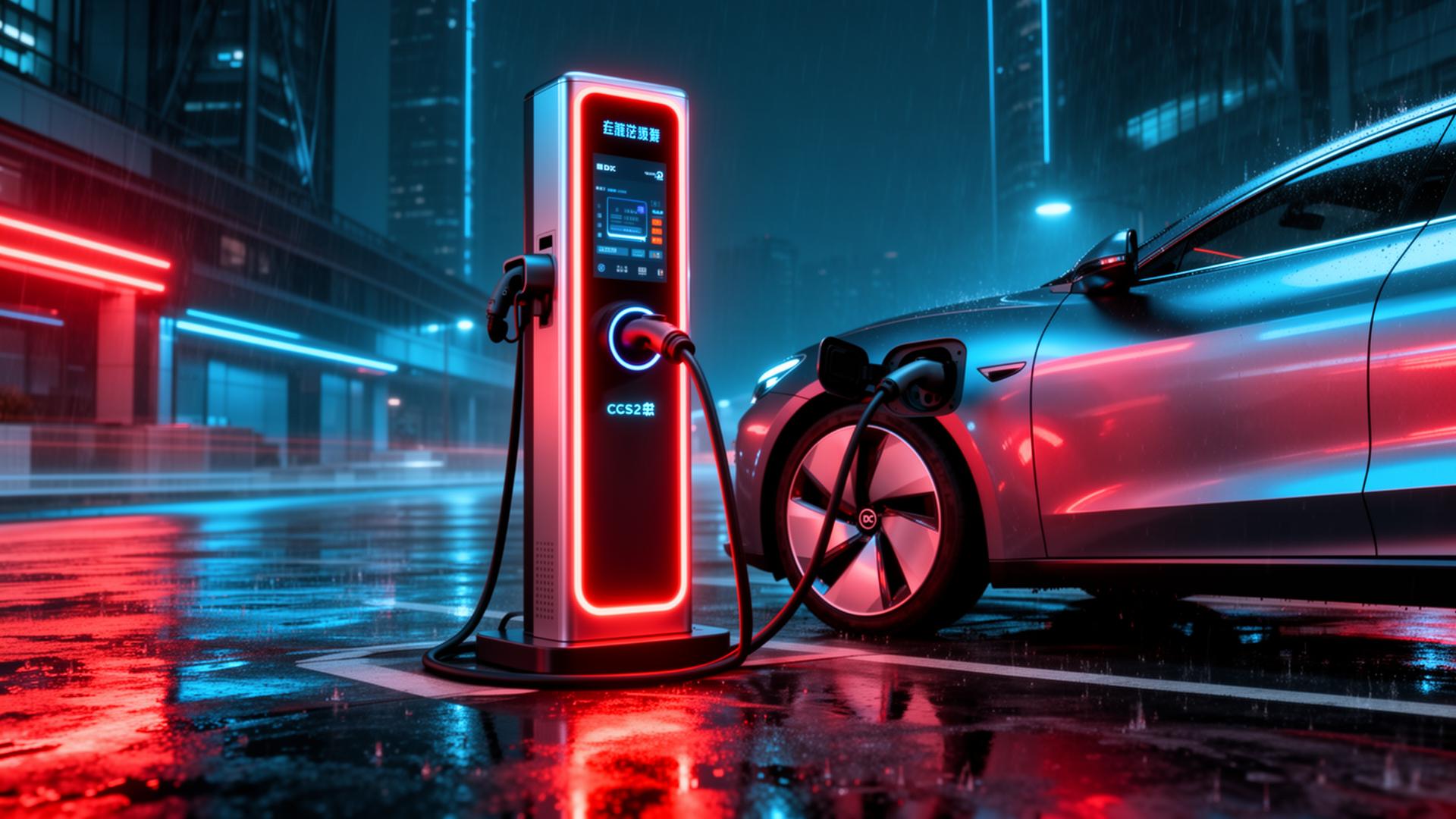
Battery swap was written off as commercially impossible for a decade. NIO and CATL have spent the last six years proving the opposite — and the economics now make sense for taxi, ride-hail and a growing share of private passenger use.
How a NIO swap actually works
Drive into a swap station and let the vehicle align itself. The car is lifted on a hydraulic platform; an under-floor robot unscrews 12 bolts, lowers the depleted pack, slides in a charged pack from the rotating stack, and re-torques the bolts.
Total elapsed time: 3 minutes 24 seconds at NIO's 4th-generation Power Swap Station. Throughput: up to 480 swaps per station per day.
Why this matters commercially
Decouples the most expensive component (the battery) from the vehicle title — enabling Battery-as-a-Service (BaaS) subscriptions.
Allows the operator to balance charging against grid pricing windows. A swap station with 30 packs is, functionally, a grid-scale stationary battery doing arbitrage and V2G.
Solves cold-weather and depleted-pack charge-rate problems instantly.
CATL EVOGO and the Choco-SEB standard
CATL's contribution is the Choco-SEB ('chocolate bar') swappable battery format — a 26.5 kWh modular unit that can be combined 1×, 2× or 3× depending on the vehicle.
This is the standard now being adopted by multiple operator fleets (Didi, Cao Cao) and second-wave passenger brands. The point is interoperability — a swap station can serve any Choco-SEB vehicle from any OEM.
Where swap makes sense for fleets
High-utilisation operator fleets (taxi, ride-hail, last-mile delivery) where minutes-of-uptime drive revenue.
Urban regions with constrained grid uplift — a swap station decouples vehicle peak-charging demand from local circuit capacity.
Routes where DC fast-charging is unreliable or congested.
- 01Battery swap is real, fast (3–5 min) and scaling.
- 02NIO has the proven retail network; CATL Choco-SEB is the multi-brand standard.
- 03Best fit for high-utilisation fleets and grid-constrained cities.
Sourcing parts or vehicles related to this?
ChinaEV.Autos connects buyers with 2,300+ verified Chinese suppliers. Get matched in minutes.