What is the difference between the BYD Blade battery and CATL LFP cells?
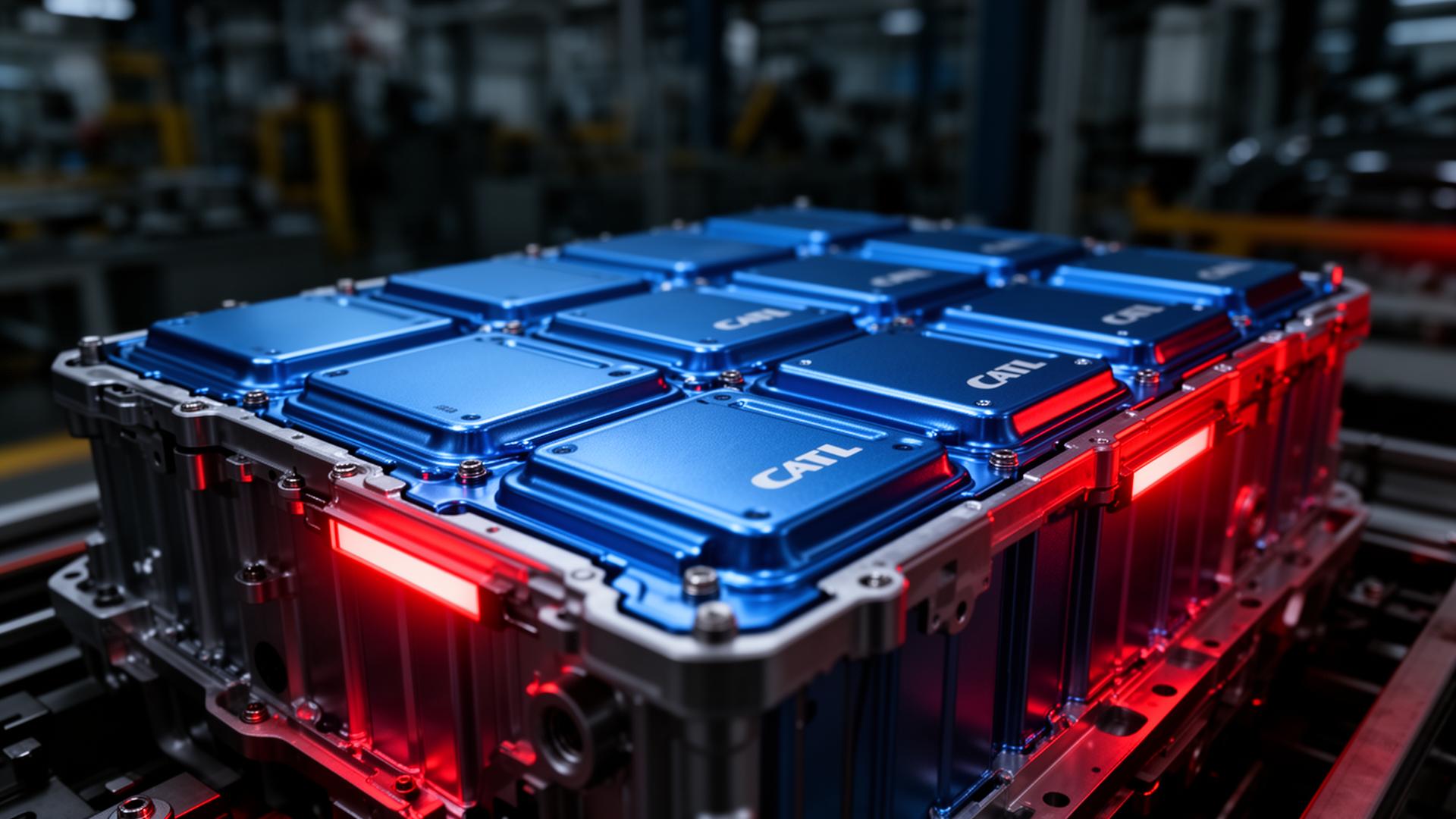
BYD Blade and CATL's LFP family are the two batteries powering most Chinese EVs you will ever consider importing or fitting. They share a chemistry but differ at almost every other engineering layer — cell format, pack architecture, thermal strategy and fast-charge curve.
Same chemistry, different geometry
Both are LFP (LiFePO4): a cathode chemistry chosen for thermal stability, low cobalt risk and very long cycle life. Where they diverge is in cell form factor and pack integration.
BYD Blade cells are very long (up to ~960 mm) and thin prismatic cells installed transversely across the pack floor. The cell itself doubles as a structural member — this is what 'cell-to-pack' (CTP) really means in BYD's case.
CATL's LFP family uses shorter prismatic cells but compensates with progressively more aggressive pack-level integration: CTP 1.0 → 3.0 (Qilin) and the Shenxing fast-charge platform.
Safety: nail-penetration and propagation
BYD's marquee demonstration is the nail-penetration test — a Blade cell punctured by a nail does not flame and barely exceeds 60 °C surface temperature. This is real, but it is a cell-level test; pack-level safety also depends on busbar layout, BMS and venting.
CATL's response has been to engineer pack-level thermal runaway containment: ceramic interlayers, dedicated venting channels and per-cell isolators in Qilin. Both packs meet GB 38031-2025 'no fire, no explosion' thermal-propagation requirements.
Charging speed and the Shenxing question
Historically, LFP charged slower than NCM above 50% SoC. CATL Shenxing (2nd-gen, 2024–26 vehicles) changes that: peak rates of ~4C and a usable 10–80% in under 12 minutes on a 5C-capable charger.
BYD's response is the Super e-Platform with a 1000 V architecture and 1 MW peak charging, shipping first on Han L and Tang L in 2025. Real-world rates depend entirely on charger output — at 250 kW DC, the two are within 1–2 minutes of each other.
Energy density and range
NCM still wins outright on gravimetric density (Wh/kg). But once you measure at pack level, Qilin LFP packs achieve ~160 Wh/kg and Blade ~150 Wh/kg, narrowing the gap with mid-tier NCM packs.
For most B- and C-segment passenger EVs, LFP now delivers 400–550 km WLTP at a lower cost, longer cycle life and better cold-weather safety margin. NCM remains the choice for ultra-long-range flagships and high-output performance EVs.
Which one should you spec?
If you are sourcing fleet vehicles or robotaxi platforms, Blade and Qilin LFP are both excellent choices — pick on vehicle integration, supplier support and warranty terms, not chemistry.
If you are sourcing replacement modules for service, BYD Blade modules are difficult to source outside BYD's own service network; CATL modules are available through more independent channels.
- 01Both are LFP — the differences are mechanical and pack-architecture, not chemistry.
- 02Blade wins on inherent cell-level safety, Qilin wins on volumetric efficiency.
- 03Modern LFP fast-charge (Shenxing, Super e-Platform) has closed the historical NCM gap.
Sourcing parts or vehicles related to this?
ChinaEV.Autos connects buyers with 2,300+ verified Chinese suppliers. Get matched in minutes.